


Kamut: The Ancient Grain Korean Wellness Lovers Are Discovering
Learn what Kamut is, how it differs from ordinary wheat, and why this nutrient-rich grain has become an interesting part of Korea’s modern wellness food culture.
What Is Kamut?
Kamut® is a registered brand name for Khorasan wheat, an ancient wheat with origins connected to the historical Khorasan region of Central Asia. Its grains are larger and more golden than common wheat, with a naturally rich, buttery and nutty taste.
The word “Kamut” describes a brand, while “Khorasan wheat” describes the grain itself. The KAMUT® brand was created to preserve the grain’s characteristics and maintain specific cultivation and quality standards.
Why Is Kamut Nutritionally Interesting?
When eaten as a whole grain, Kamut provides plant-based protein, dietary fiber and minerals. A cup of cooked Kamut contains approximately 9.8 grams of protein and 7.4 grams of fiber, although values vary by product and preparation.
These qualities do not make Kamut a miracle food. Its main value is that it gives consumers another whole-grain option that can be enjoyed in many different ways.
Why Is Kamut Important in Korea?
1. It fits Korea’s mixed-grain food culture
Rice is central to Korean meals, but mixed-grain rice and grain bowls are already familiar. Kamut can be combined with rice, barley, beans or other grains to add a chewy texture and nutty flavor.
2. It matches the wellness trend
Korean consumers are increasingly interested in convenient foods connected to daily nutrition, digestive comfort, energy and healthy lifestyle choices. Kamut’s whole-grain identity makes it attractive to this audience.
3. It is being studied locally
Recent Korean research has examined Khorasan wheat’s agronomic and nutritional qualities. One 2025 study reported higher protein and mineral contents than common wheat varieties tested in the study, encouraging further interest.
4. It supports premium product innovation
Kamut can be used in cereals, pasta, bakery products, grain blends and fermented enzyme supplements. Its distinctive story and flavor help brands create products with a premium, educational appeal.
Kamut and the Korean Diet
Korean meals often include carbohydrate-rich staples such as rice, noodles, bread and rice cakes. This does not mean carbohydrates are unhealthy; they are an important source of energy. The key is variety, portion balance and choosing nutrient-dense foods when possible.
Kamut is relevant because it can be introduced into familiar routines. Consumers may mix cooked Kamut with rice, add it to a grain bowl, or choose a convenient fermented-grain product after a meal.
How Can You Enjoy Kamut?
| Form | How to use it | What to expect |
|---|---|---|
| Whole cooked grains | Mix with rice, add to salads, bowls or soups | Firm, chewy texture with a nutty taste |
| Kamut flour | Use in bread, pancakes, pasta, cookies and crackers | Rich flavor; recipes may need liquid adjustments |
| Fermented enzyme sticks | Use according to the product label, usually as a convenient daily supplement | Portable powder format designed for easy use |
Explore Kamut Products from Kim’s Basket
Discover Korean wellness products featuring Kamut and Khorasan wheat. Product availability may change, so please check the individual product page for the latest information.
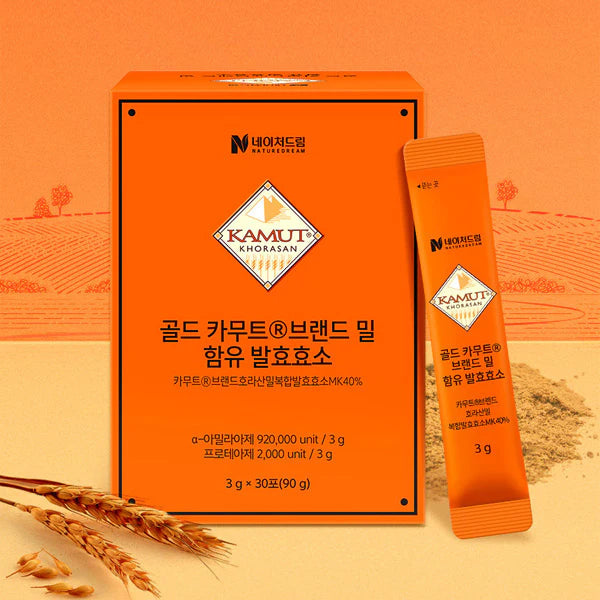
Gold Kamut Wheat Fermented Enzyme
Convenient 3 g × 30-stick format featuring fermented grains and Kamut® brand Khorasan wheat.
View product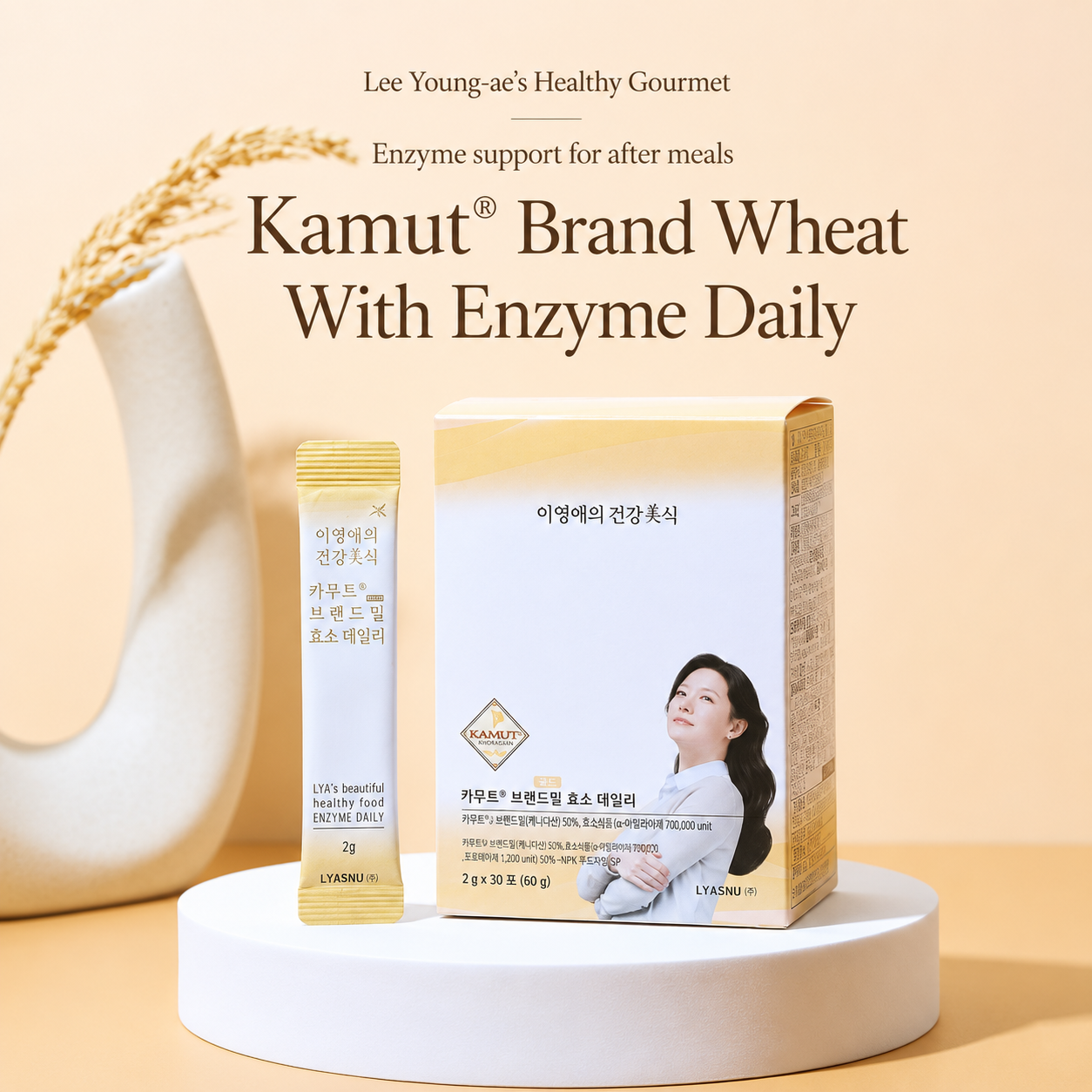
Kamut Brand Wheat Enzyme Daily
A portable 2 g × 30-stick product designed for a simple daily wellness routine.
View product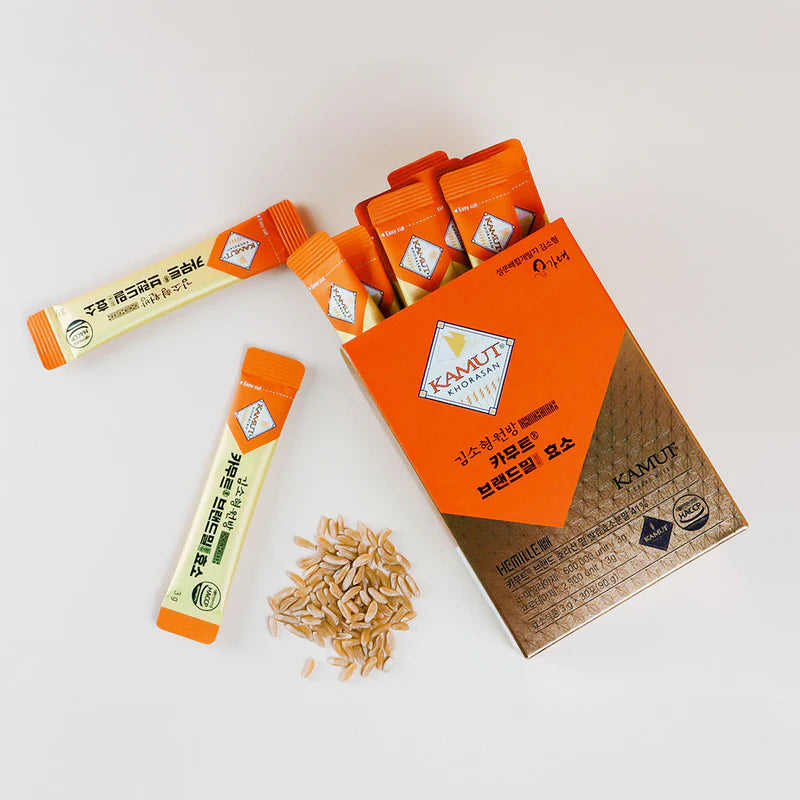
Kim So-hyung Kamut Khorasan Wheat Enzyme
A convenient 3 g × 30-stick Korean wellness product featuring Kamut Khorasan wheat.
View product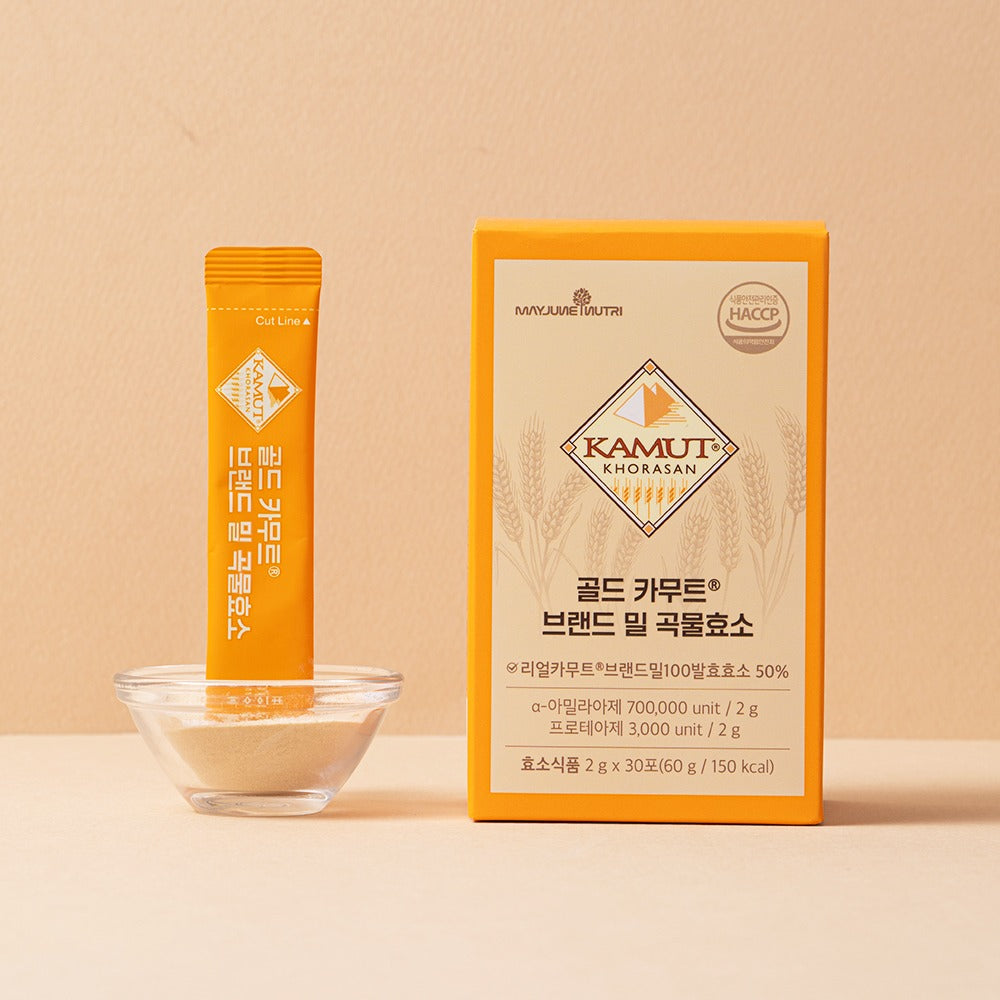
Gold Kamut® Wheat Fermented Enzyme
A 2 g × 30-stick fermented enzyme product made for convenient everyday use.
View productIs Kamut Gluten-Free?
No. Kamut is a form of wheat and contains gluten. People with celiac disease, wheat allergy or medically diagnosed gluten sensitivity should avoid it unless advised otherwise by a qualified healthcare professional.
Final Thoughts
Kamut is an ancient grain with modern relevance. It combines a distinctive history, whole-grain nutrition and a flavor that works in both traditional-inspired meals and convenient Korean wellness products.
For Korea, its importance is not that it replaces rice or traditional ingredients. Instead, Kamut adds another meaningful choice to the country’s expanding culture of mixed grains, premium foods and everyday wellness.
This article is for educational purposes only and is not medical advice. Nutritional values and product claims may vary. Always read the product label and consult a healthcare professional for questions about allergies, pregnancy, medication or medical conditions.