


Coffee before emails. Tea during the afternoon slump. Maybe red wine with dinner. The drinks you enjoy can leave color behind—even when your brushing routine feels perfectly responsible.
Before declaring war on your morning latte, it helps to understand what those visible changes are—and what a purple powder can realistically do about them.
Not every darker-looking tooth is the same kind of stain
Surface stains
Coffee, tea, red wine, cola, tobacco, and strongly pigmented foods can leave extrinsic color on enamel. Brushing products may help reduce this type of surface staining.
Internal color
The natural or intrinsic color inside a tooth is different. A surface-cleaning toothpaste will not significantly change deep discoloration, restorations, or the tooth’s natural internal shade.
+
YELLOW
Why put purple powder on teeth?
Purple sits opposite yellow in basic color theory. Puriven uses purple pigments inspired by that complementary-color relationship to help warm yellow tones look more balanced during a brightening routine.
Keep expectations realistic: Color correction can influence how the surface appears, while polishing ingredients work on removable surface deposits. It is not the same as peroxide bleaching or professional whitening.
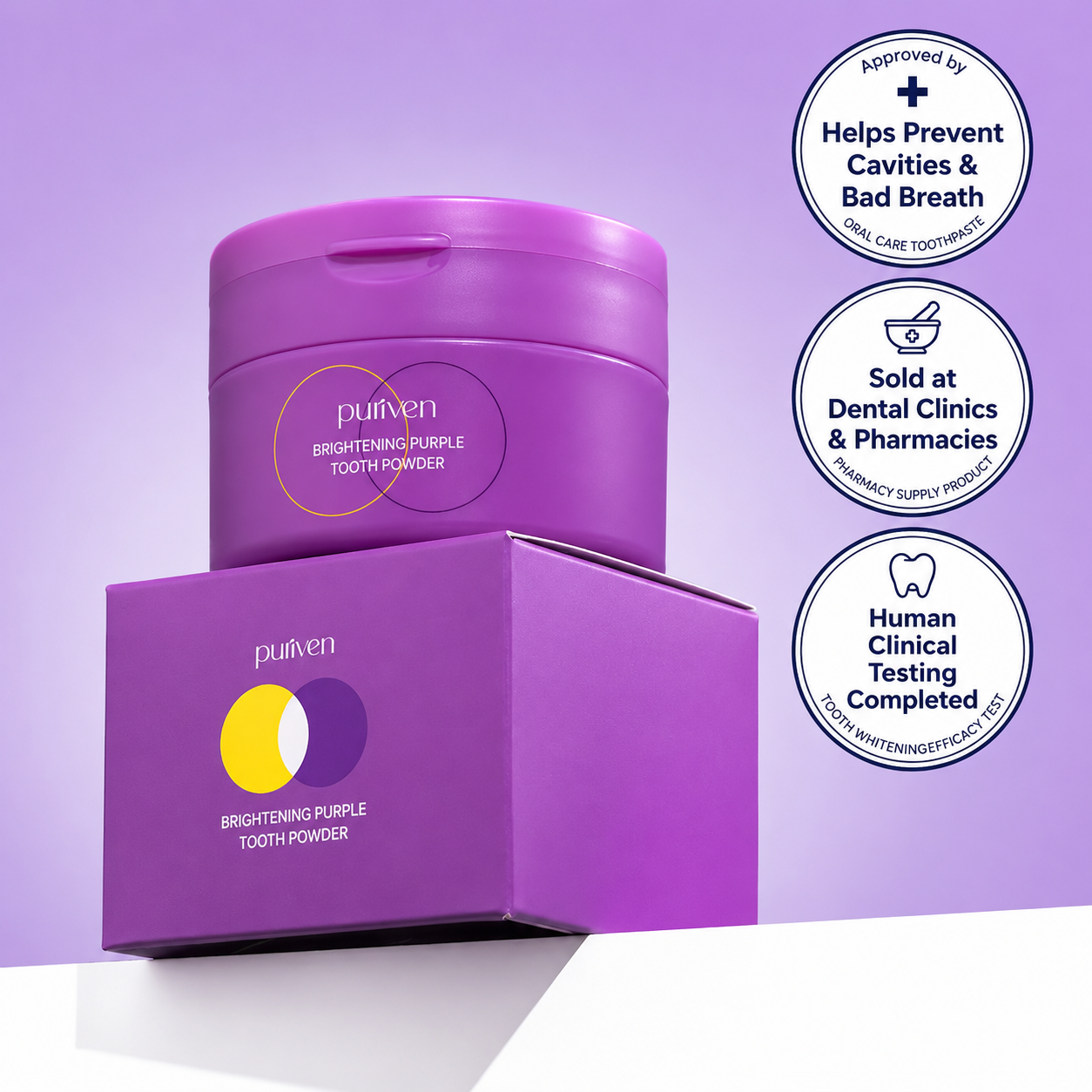
Puriven Purple Powder Toothpaste
A 40 g Korean powder toothpaste created for daily surface-stain care, a refreshed after-brushing feel, and a more playful alternative to ordinary paste.
A closer look at the powder blend
The verified ingredient panel combines polishing and cleansing ingredients with cooling, botanical, and flavor components. Here are the ingredients most relevant to the experience:
How to use it without turning the jar into a purple paste
Manufacturer guidance: Use the powder on its own rather than sprinkling it over another toothpaste. The reference recommends brushing two to three times daily. Never dip a wet brush into the jar, keep water out, and close the lid tightly after use.
What this routine can—and cannot—do
It may help with
- Everyday extrinsic surface stains
- A cleaner, polished surface feel
- Visually balancing warm yellow tones
- A fresh, cooling after-brush sensation
It cannot promise
- Permanent bleaching of tooth color
- Changes to fillings, crowns, or veneers
- Removal of tartar or deep discoloration
- The same result for every smile
Brightening and cavity protection are not identical goals
We did not find a fluoride ingredient on the reference product panel. The American Dental Association recommends brushing twice daily for two minutes with fluoride toothpaste for cavity prevention.
The Puriven manufacturer recommends using this powder by itself rather than combining it with another paste in the same brushing session. If you have frequent cavities, sensitive teeth, enamel concerns, or a dentist-prescribed fluoride routine, ask your dentist how—or whether—this product should fit into your care plan.
Puriven Purple Powder Toothpaste FAQs
Should I wet the toothbrush first?
No. The manufacturer/reference directions specifically say to use a dry toothbrush and prevent water from entering the jar. Moisture can cause the powder to clump.
Can I sprinkle it over regular toothpaste?
The manufacturer recommends using the powder as a standalone toothpaste rather than layering it over another paste. Because fluoride is not listed on the reference panel, ask your dentist how to maintain your fluoride routine.
Will it make every tooth bright white?
No product can promise the same shade for everyone. Surface-care products may reduce removable external stains and affect how warm tones appear, but they do not significantly change intrinsic tooth color or whiten restorations.
What if the powder forms clumps or white crystals?
The reference explains that coconut oil components may cause harmless clumping, while menthol can form fine white needle- or thread-like crystals with temperature or humidity changes. Keep the container dry and check the physical label if anything appears unusual.
Can children, pregnant people, or sensitive users use it?
The manufacturer recommends it for children age six and older who can spit reliably, with adult supervision; the adult formula may feel strong. During pregnancy, review the full ingredient list and consult a dentist, obstetrician, or pharmacist if your mouth is sensitive or you are unsure. Stop use and seek professional advice if irritation occurs.
Build an oral-care routine that fits your real habits
From surface-stain care to daily brushing essentials, compare formats and choose products that support both the appearance and health of your smile.
Explore Oral CareSources: Product facts and directions were checked against the Puriven manufacturer/reference listing and the Kim’s Basket product page. General information about surface stains, whitening toothpaste, and fluoride brushing was reviewed using American Dental Association resources.
This article provides general educational information and is not dental advice. Oral-care products do not replace professional examinations, cleanings, or treatment. Check the physical label for the latest ingredients, directions, and warnings.